Meet Dolly, Our School Dog
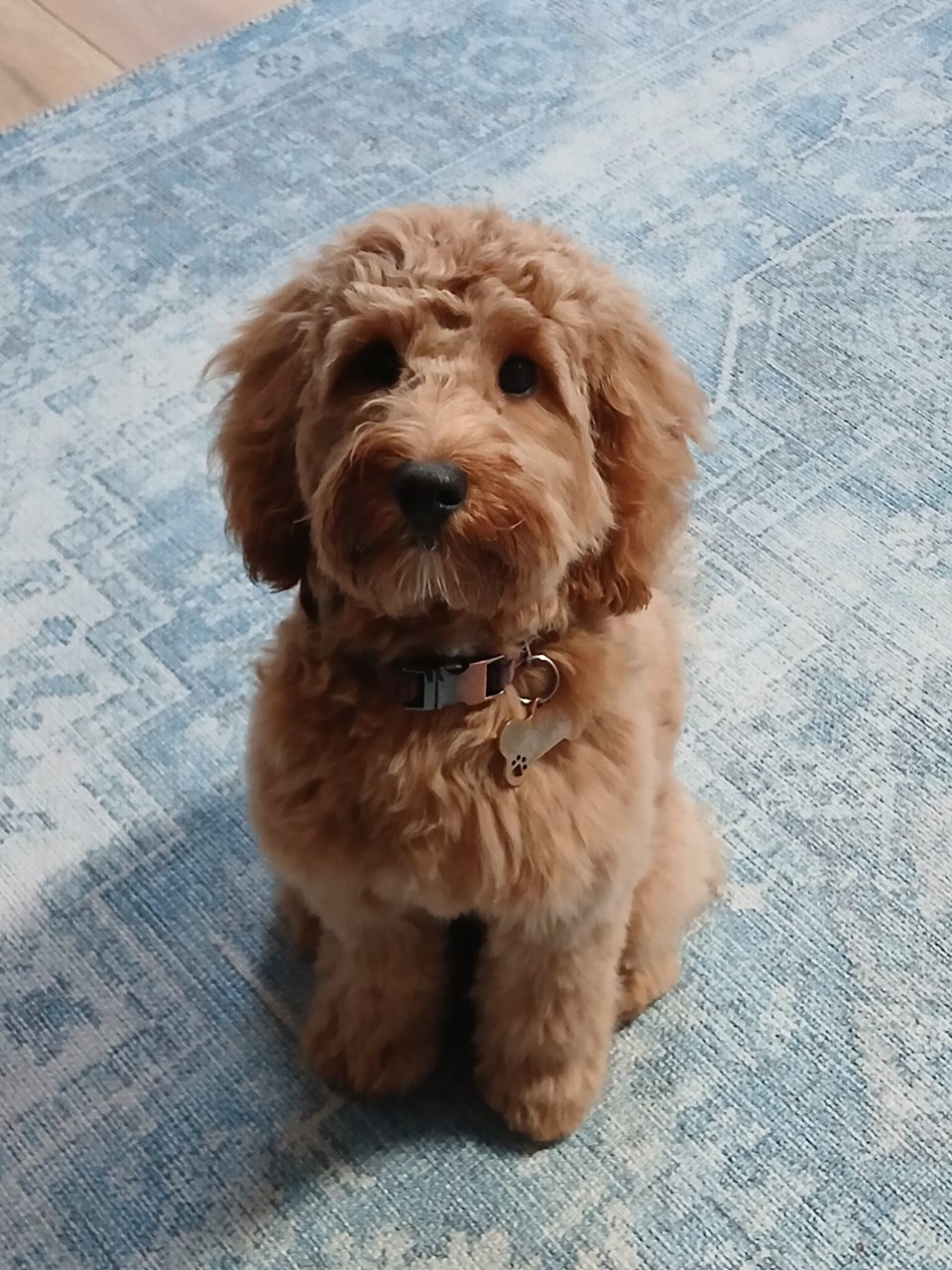
Dolly is Mrs O'Neill's family pet. She is a friendly and loveable Cockapoo ( a cross between a cocker spaniel and a miniature poodle) who has joined us as part of our efforts to enhance the well-being and educational experience for children and staff here at Rood End Primary School.
Dolly is getting used to being in school at the moment - she loves it because there is just so much to see!
Dolly and designated staff will be undertaking training with 'The Dog Mentor' so that Dolly can regularly help children with their learning in school.
Once fully trained, Dolly will spend her days visiting the classrooms, joining in with nurture sessions and listening to readers across the school. Sometimes she will even help us out by looking after anyone who is feeling a bit sad - just being around her is enough to make anyone feel happy again!
The Benefits of a School Dog
Anxiety Reduction
A variety of anxiety problems can be addressed by the presence of a dog as it creates a calming influence helping to decrease blood pressure and stress responses. Children also become less self-conscious of themselves as their attention is focused on the dog instead.
Attention & Behavioural Difficulties
Attention issues and disorders are most commonly associated with attention deficit
hyperactivity disorder (ADHD), but they can also be caused by other things including; anxiety, depression, learning disorders, sensory problems and trauma.
Studies have shown the presence of a trained therapy dog has helped:
Increase children's attention and concentration performance
Provide an outline for excess energy
Provide a non-judgmental companion
Provide social interaction opportunities
Encourage routines
Decrease stress
Offer a healthy distraction
Social Interaction & Relationships
Working with a dog provides children with the opportunity to develop a unique experience whereby they can return empathy, learn to share and understand to consider the needs of the dog before their own. By creating trust through their relationship with the dog they develop the skills to help towards building better relationships with peers and adults.
Frequently Asked Questions
Q Who is the legal owner of the dog and who pays for its costs?
A The legal owner of the dog is Mrs O'Neill. She will bear the costs associated with owning the dog at home; the school budget will support training costs and insurance for her whilst at school. The school's public liability insurance covers a school dog as long as stringent measures are in place including a robust risk assessment, the parental choice of accessing the dog for their child/children, a responsible owner trained alongside the dog and appropriate pet insurance.
Q What is the age and breed of the dog?
Dolly is a cockapoo. She started coming into school from 16 weeks, she is almost 7 months old.
Q Who is responsible for training?
A Mrs O'Neill is the legal owner of the dog and as a result, will be responsible for her training. Additional handlers in school will also be trained. School will be funding the dog's training to be obtained via The Dog Mentor.
Q How will the dog be toileted to ensure hygiene for all?
A As Dolly is still a puppy, she will occasionally use a puppy pad in a designated area of Mrs O'Neill's office, but will mostly be toileted when taken out for walks out of the school grounds.
Q Will the dog be a distraction to pupils' learning?
A The dog will be kept in Mrs O'Neill's office when she is resting. To enable the dog to have more space to roam when she is not working, she will also have access to the Senior Leaders Office. There will be designated trained staff around school who will support Mrs O'Neill in caring for the school dog. During interventions, the dog will work with children (whose parents have given permission) in an intervention room or classroom. The dog may also attend meetings with staff to support further socialisation, and support staff well-being, following consultation with staff beforehand. The dog will always be on a lead when moving around the school site.
Q What if my child is scared of dogs? Will they be forced to be in the same room as the dog?
A No. The dog will be kept in offices and she will work in intervention rooms. We will ensure the school dog only has contact with children who are happy to have contact with her and where there has been no refusal of permission by parents, this will be under strict supervision. A pupil will not be forced to be in contact with the dog at any time against their wishes. We hope to work closely with parents of children who are fearful of dogs to alleviate their fear and to teach them how to manage this using evidence-based interventions such as graded exposure.
Q How will the dog's welfare be considered?
The dog's welfare will be carefully monitored. The dog will be walked regularly throughout the day and given free time outside of sessions to rest and play. The dog will be carefully trained over a period of time and will have appropriate access to food, treats, water and toys.
Q How will this be managed where children have allergies?
A Cockapoos are classed as hypoallergenic as they have low / no shedding fur. They get this trait from the mix with Poodles who have a low dander count. This makes them great choices for people who suffer from dog allergies and asthma. However, no dog is considered 100% hypoallergenic and therefore children with allergies will not need to touch the dog or be in the same room as the dog at any point which will relieve the possibility of allergic reactions. We already manage a number of allergies and this will be no different for children and adults that are allergic to dogs. Individual needs will always be met and we are happy to work with parents to put additional control measures in place for individual allergies. The dog will be regularly groomed and fur trimmed to reduce any possibility of allergens. A letter will go out to all pupils at the start of each year and to parents whose children join throughout the year to ask about allergies or where parents refuse to allow their child access to the dog.
Q Does this mean parents can bring their dogs onto school site?
A No, other dogs are still not allowed. The school dog will have received assessment, training and insurance to enable her to be on the school site.